The corridors here look repulsive and yet this one leads to some sort of a shrine:
On Oct. 29, 1969, 35-year-old Leonard Kleinrock and his team succeeded in sending the first host-to-host message from UCLA to the Stanford Research Institute hundreds of miles away, signaling the birth of the Internet.
It’s the location where the internet began:
While the initial message was intended to be “LOGIN,” the team managed only partial success. “We succeeded in transmitting the ‘L’ and the ‘O’,” Kleinrock recalled, “and then the system crashed.”
Het radioprogramma “Nooit meer slapen” over een documentaire die ook daarmee opent:
So the first message ever on the internet was “Lo” as in “Lo and Behold”. We couldn’t have asked for a more succinct, more powerful, more prophetic message than “Lo”.
De gelijknamige documentaire werd van de week via NPO 2 uitgezonden:
Lo and Behold, Reveries of the Connected World - 2016, Werner Herzog, 98 minuten
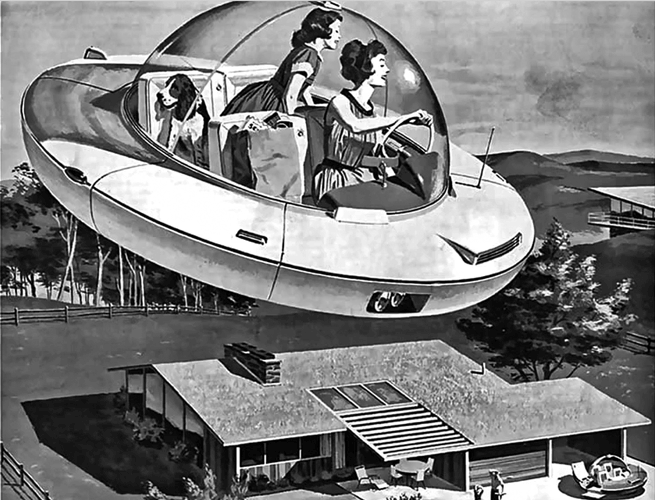
And if you think about predictions about the future as done in the past, they always miss the important stuff.
In fact, most science fiction missed the most important thing about the present world, which is the internet itself.
They had flying cars, they had rocket ships.
None of that exists, but the internet governs our lives today.
Zaten ernaast maar proberen het daarna nog goed te maken. Een hele waslijst, begint in 1992:
Who’s going to control all this technology? The corporations, of course. And will that mean your brain implant is going to come complete with a corporate logo, and 20 percent of the time you’re going to be hearing commercials?
1992 Forbes - “An Ultimate Zip Code”:
Combine GPS with a simple transmitter and computer … If you want to track migratory birds, prisoners on parole or – what amounts to much the same thing – a teenage daughter in possession of your car keys, you are going to be a customer sooner or later.
1993 Wired - “War is Virtual Hell”:
The whole massive, lethal superpower infrastructure comes unfolding out of 21st-century cyberspace like some impossible fluid origami trick. The Reserve guys from the bowling leagues suddenly reveal themselves to be digitally assisted Top Gun veterans from a hundred weekend cyberspace campaigns. And they go to some godforsaken place that doesn’t possess Virtual Reality As A Strategic Asset, and they bracket that army in their rangefinder screens, and then they cut it off, and then they kill it. Blood and burning flesh splashes the far side of the glass. But it can’t get through the screen.
1993 Wired - “Shock Wave (Anti) Warrior”:
If we are now in the process of transforming the way we create wealth, from the industrial to the informational … the more knowledge-intensive military action becomes, the more nonlinear it becomes; the more a small input someplace can neutralize an enormous investment. And having the right bit or byte of information at the right place at the right time, in India or in Turkistan or in God knows where, could neutralize an enormous amount of military power somewhere else … Think in terms of families. Think in terms of narco-traffickers. And think in terms of the very, very smart hacker sitting in Tehran.
1994 Wired - “The Economy of Ideas”:
We’re going to have to look at information as though we’d never seen the stuff before … The economy of the future will be based on relationship rather than possession. It will be continuous rather than sequential. And finally, in the years to come, most human exchange will be virtual rather than physical, consisting not of stuff but the stuff of which dreams are made. Our future business will be conducted in a world made more of verbs than nouns.
In 1994 al over Giro 555 - “The Cultural Consequences of the Information Superhighway”:
We would do well to regulate our enthusiasms accordingly - that is, to remember where love and mercy have their natural homes, in that same material world. Otherwise we will have built yet another pharaonic monument to wealth, avarice, and indifference. We will have proved the technophobes right. More to the point, we will have collaborated to neglect the suffering of the damned of the earth – our other selves – in order to entertain ourselves.
1995 Wired - “Faded Genes”:
In 2088, our branch on the tree of life will come crashing down, ending a very modest (if critically acclaimed) run on planet earth. The culprit? Not global warming. Not atomic war. Not flesh-eating bacteria. Not even too much television. The culprit is the integrated circuit … By 2090, the computer will be twice as smart and twice as insightful as any human being. It will never lose a game of chess, never forget a face, never forget the lessons of history. By 2100, the gap will grow to the point at which homo sapiens, relatively speaking, might make a good pet. Then again, the computers of 2088 might not give us a second thought.
1995 Wired - “Superhumanism”:
The robots will re-create us any number of times, whereas the original version of our world exists, at most, only once. Therefore, statistically speaking, it’s much more likely we’re living in a vast simulation than in the original version. To me, the whole concept of reality is rather absurd. But while you’re inside the scenario, you can’t help but play by the rules. So we might as well pretend this is real - even though the chance things are as they seem is essentially negligible.
1995 Wired - “Wearable Computing”:
How better to receive audio communications than through an earring, or to send spoken messages than through your lapel? Jewelry that is blind, deaf, and dumb just isn’t earning its keep. Let’s give cuff links a job that justifies their name … And a shoe bottom makes much more sense than a laptop - to boot up, you put on your boots. When you come home, before you take off your coat, your shoes can talk to the carpet in preparation for delivery of the day’s personalized news to your glasses.
Ok, 2017, factchecks, ‘smart jewelry’, vinkje. Dan ‘physicist’ Lawrence Krauss in “Lo and Behold”:
Hundreds of millions of people will die. The world will become, for people like you and me, unimaginably ugly, difficult, and there’s great likelihood that I couldn’t survive.
If the internet shuts down, people will not remember how they used to live before that.
2017 - Jonathan Zittrain, Harvard Law School, ook in deze documentaire:
I start to think of Maslow’s hierarchy of needs. I mean, let’s get back to the base of the pyramid and think about food and shelter.
You have food networks that are hugely dependent on being able to route digitally what the needs are and where and, through efficiencies created when the network is working well, you don’t have warehouses near people stocked to the brim with food.
If you disrupt those networks I imagine, what do they say? “Civilization is always about four square meals away from utter ruin”? That’s something that it wouldn’t be bad to prepare for.